


Introduction to New Education Policy
Every generation or so, a country pauses and asks itself a fundamental question: Are we preparing our children for the world that actually exists, or for a world that has already passed? That question is never comfortable. It requires looking honestly at systems that entire careers have been built around, that millions of families have trusted, and that governments have defended for decades. But it is a necessary question — and how a nation answers it says a great deal about the seriousness of its ambitions.
India is in the middle of answering that question right now. The New Education Policy, originally introduced in 2020 and now being implemented with renewed energy and specificity through 2025, represents the most ambitious overhaul of India’s educational architecture in over three decades. It touches everything — how young children learn to read, how universities award degrees, how teachers are trained, how languages are taught, and how the entire ecosystem of learning connects to the realities of a rapidly changing economy.
For students, parents, teachers, and anyone who cares about where India is headed, understanding the New Education Policy is not optional. It is essential. This article will walk you through what it actually means, why it matters, and what opportunities and challenges lie ahead.
What is the New Education Policy?
To understand the New Education Policy in its full dimensions, it helps to first appreciate what it replaced. For thirty-four years, India’s educational system was governed by the National Policy on Education of 1986 — a framework designed for a country that was economically liberalising, technologically pre-digital, and socially very different from the India of today. That policy served its era reasonably well. But decades of demographic change, technological disruption, and global economic integration had left it looking increasingly dated.
The New Education Policy 2020 — formally called NEP 2020, and now being operationalised through state-level and institutional implementation as we move through 2025 — was drafted after one of the most extensive public consultation processes in Indian policy history. It involved inputs from teachers, students, parents, academics, industry leaders, and civil society organisations across all states and union territories. The result is a document that is simultaneously visionary and, in places, deliberately vague — leaving room for states to interpret and implement according to their specific contexts.
At its structural core, the New Education Policy replaces the old 10+2 school structure with a 5+3+3+4 framework. This means the early years of schooling — the foundational stage from ages three to eight — receive formal policy recognition and investment for the first time. This is significant because decades of research in developmental psychology and early childhood education have established that the years before age eight are disproportionately important for cognitive development, language acquisition, and emotional regulation. India’s previous policy treated these years as largely pre-educational. NEP 2020 treats them as foundational.
At the higher education level, the policy introduces a flexible credit-based system, multiple entry and exit points from degree programmes, and an Academic Bank of Credits that allows students to accumulate qualifications over time and across institutions. A student who needs to pause their education for family or financial reasons — a reality that affects millions of Indian families — can now do so without losing the academic credit they have already earned. That is not a small change. For many Indian students, it could be the difference between completing a degree and being permanently locked out of formal qualification.
Why the New Education Policy Matters So Deeply
New Educational policy can feel abstract — a document discussed in committee rooms, debated in parliament, and implemented in bureaucratic stages. But its effects are anything but abstract. They arrive in classrooms and kitchens, in the confidence of a child who has been taught to think rather than simply memorise, in the expanded life choices of a young woman from a rural district who was never before given the academic scaffolding to reach her potential.
The New Education Policy matters for reasons that operate at multiple scales simultaneously. At the national scale, India faces a pressing and well-documented crisis of educational outcomes. Despite significant improvements in enrolment over the past two decades, learning outcomes have remained stubbornly poor. Annual surveys of rural education have repeatedly found that a disturbingly large proportion of children in upper primary school cannot read a basic paragraph or solve simple arithmetic problems. A country cannot build a knowledge economy on this foundation. NEP 2020 addresses this directly by shifting the emphasis of early schooling from content coverage to foundational literacy and numeracy.
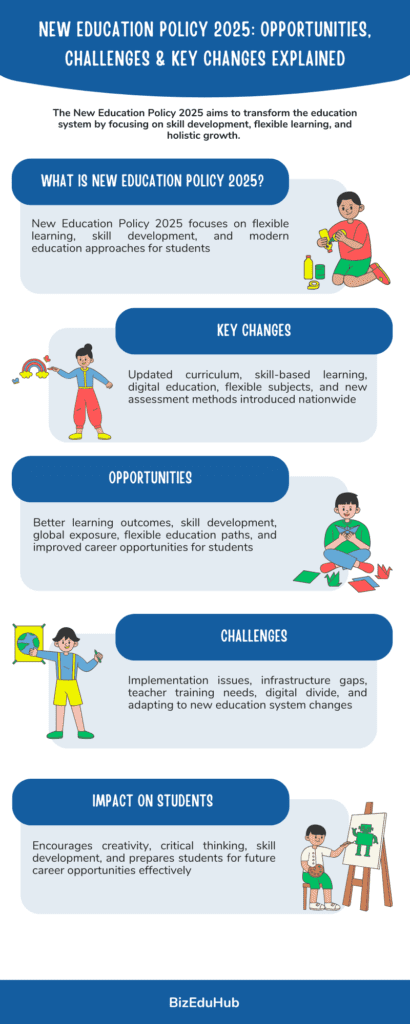
At the individual scale, the policy matters because it reframes the relationship between education and identity. For generations, Indian students were funnelled into streams — science, commerce, arts — at the age of fifteen or sixteen, with those choices often determining the entire trajectory of their professional lives. The new framework explicitly dismantles these rigid streams, allowing students to combine subjects across traditional boundaries. A student who loves both mathematics and music, or both biology and economics, no longer has to choose one world and abandon the other. That freedom, modest as it may sound, represents a profound shift in how India thinks about human potential.
There is also the question of language — one of the most politically sensitive aspects of the entire policy. New Education Policy 2020 recommends that children be taught in their mother tongue or home language in the early years of schooling, with other languages introduced progressively. The research basis for this recommendation is solid: children learn to read and reason most effectively in the language they think in at home. But implementation requires enormous investment in multilingual teaching materials, teacher training in regional languages, and political navigation of the perennially contentious language politics of the Indian state.
Key Changes and What They Mean in Practice: New Education Policy
1. The 5+3+3+4 Curricular Structure
The Foundational Stage (Ages 3–8)
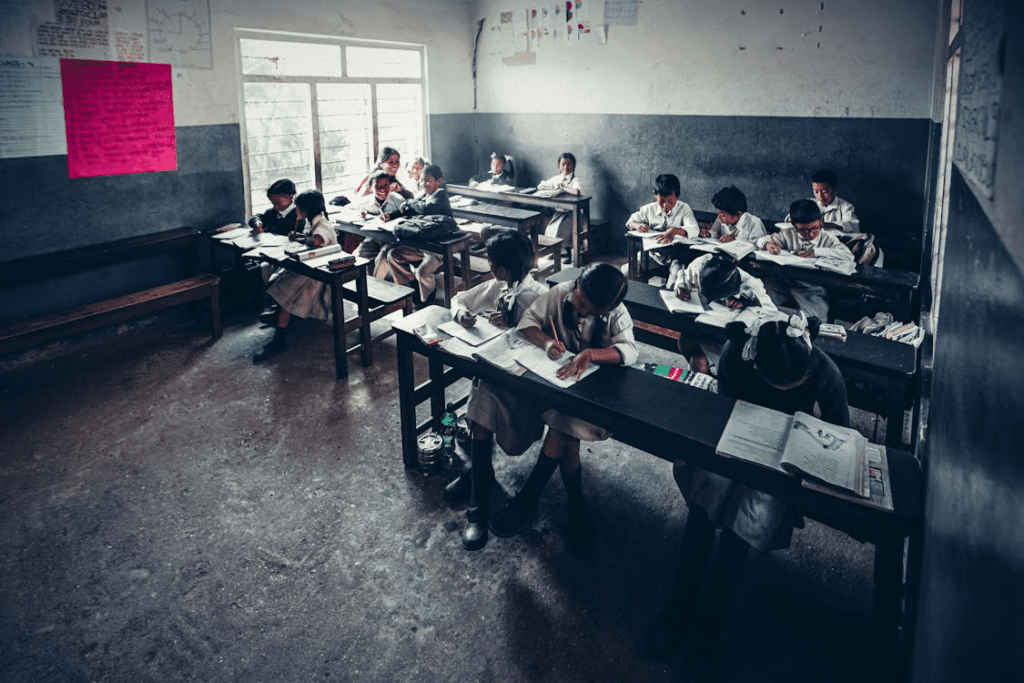
This is perhaps the most consequential structural change in the New Education Policy 2020. The five years of the foundational stage — three years of preschool or Anganwadi followed by Classes 1 and 2 — are now formally integrated into the school education framework. The curriculum for this stage emphasises play-based and activity-based learning, mother tongue instruction, and the development of foundational literacy and numeracy skills.
For a country where millions of children arrive at Class 3 unable to read or count reliably, this reorientation of the early years is not merely philosophically appealing — it is practically urgent. States like Tamil Nadu, Kerala, and Himachal Pradesh, which have already invested heavily in early childhood education, have a head start. States with weaker preschool infrastructure face a significant implementation challenge.
The Preparatory Stage (Ages 8–11)
Classes 3 through 5 form the preparatory stage, during which children transition from play-based learning to more structured academic content, while retaining significant experiential and discovery-based elements. The emphasis here is on building conceptual understanding in mathematics, science, and language before students encounter the more complex demands of middle school.
The Middle Stage (Ages 11–14)
Classes 6 through 8 introduce subject specialisation, including a new emphasis on critical thinking, coding, and vocational exploration. The inclusion of coding as a curriculum subject from Class 6 reflects both the economic reality of India’s technology sector and the broader truth that computational thinking is increasingly a foundational literacy in its own right.
The Secondary Stage (Ages 14–18)
Classes 9 through 12 have been reconceived to offer significantly greater flexibility. The hard boundaries between streams are dissolved. Assessment moves toward competency demonstration and project-based evaluation alongside examinations. Board examinations are proposed to shift toward testing genuine understanding rather than rote reproduction — a change that, if properly implemented, would transform the entire culture of examination preparation in India.
2. Higher Education Reforms
The Four-Year Undergraduate Programme
One of the most discussed changes at the university level is the introduction of a four-year undergraduate degree as the primary qualification, replacing the three-year degree that has been the Indian standard. The four-year programme includes a research component in the final year, creating a pathway that better prepares graduates for postgraduate study and research careers. Students who wish to exit after three years can do so with a degree; those who exit after two years receive a diploma. This flexibility is genuinely progressive.
Multidisciplinary Universities and Liberal Education
New Education Policy 2020 envisions the gradual transition of India’s higher education institutions from single-stream or affiliated college models to large multidisciplinary universities offering genuine liberal education. The vision is ambitious — and the timeline is long. But the direction is correct. India’s current higher education architecture, with thousands of small affiliated colleges offering narrow programmes with limited resources, is structurally incapable of producing the kind of deep, versatile graduates the economy needs.
3. Teacher Education Reforms
Four-Year Integrated B.Ed Programme
The policy mandates that teacher education be restructured around a four-year integrated Bachelor of Education programme, replacing the current one-year B.Ed that many argue produces insufficiently prepared teachers. Teaching is treated in the new policy not as a fallback profession for those who could not get into more competitive fields, but as a foundational profession deserving of serious, extended preparation.
Practical Tips for Navigating the New Education Policy

- For parents of young children: Engage actively with your child’s foundational stage learning. The new curriculum is designed to be experienced, not just delivered. Read together, explore together, and trust that play-based learning in these years is not wasted time — it is precisely the right investment.
- For secondary school students: Begin thinking about your subject combinations with genuine curiosity rather than perceived prestige. The dissolution of rigid streams is an invitation to design an education that reflects who you actually are.
- For undergraduate students: Familiarise yourself with the Academic Bank of Credits system at your institution. Understand your entry and exit options. Make informed decisions rather than assuming the traditional path is the only path.
- For teachers: Engage with professional development programmes actively. The new pedagogy requires different skills — facilitating inquiry rather than delivering content. This is a genuine opportunity for professional renewal.
- For school administrators: Invest in curriculum mapping under the new framework early. Schools that wait for complete government guidance before beginning implementation will fall behind those that begin thoughtful adaptation now.
- For policymakers and educators at the state level: Implementation quality varies enormously between states. Study the examples of states that are implementing well and resist the temptation to treat the policy as a compliance exercise rather than a genuine reform opportunity.
Real-Life Examples: Where the New Education Policy is Making a Difference
In a government primary school in rural Rajasthan, a Class 2 teacher named Sunita has spent the past year transitioning from chalk-and-talk instruction to activity-based learning under the new foundational curriculum. She is honest about how difficult the transition was — years of habit are not easily unlearned. But she describes something she had not expected: the children are more engaged. They ask more questions. A girl named Roshni, who had been nearly invisible in the old format — quiet, compliant, never volunteering answers — has become one of the most active participants in discovery-based lessons. The new method, Sunita says, found children that the old one had missed.
In Pune, a Class 11 student named Arjun made a subject combination choice that would have been impossible two years earlier — mathematics, music theory, and entrepreneurship. His parents were initially anxious. Would this unconventional combination close doors? A year in, Arjun is developing a mobile application that incorporates algorithmic music composition — a project that sits precisely at the intersection of his three subjects and has attracted the attention of a national youth innovation competition. The New Education Policy did not create Arjun’s talent. It created the space for it to emerge.
At a central university in Hyderabad, the four-year undergraduate programme has produced its first cohort of graduates. Early employer feedback has been notably positive — graduates arrive with research experience, a wider subject range, and demonstrably stronger critical thinking skills than their predecessors under the three-year model. The transition was not seamless; faculty had to redesign courses, assessment systems had to be rebuilt, and students in the early cohorts navigated genuine uncertainty. But the outcomes suggest the disruption was worthwhile.
Common Mistakes in Understanding and Implementing the New Education Policy
- Treating the New Education Policy as a completed reform rather than an ongoing process. The policy document is a vision, not a finished product. Implementation is uneven, contested, and still evolving. Assuming that because the policy exists, the changes have occurred is a fundamental misreading of how educational reform actually works.
- Focusing only on higher education changes while ignoring foundational reforms. The most consequential changes in the New Education Policy 2020 are arguably at the earliest stages of education. Parents and commentators who discuss only university-level reforms are missing the part of the policy with the greatest long-term impact.
- Assuming subject flexibility means abandoning academic rigour. Some parents and students have interpreted the dissolution of rigid streams as a signal that depth no longer matters. The opposite is intended. The policy calls for deeper engagement with chosen subjects, not shallower engagement with more of them.
- Ignoring implementation disparities between states. The New Education Policy is a national framework, but education is a concurrent subject in India’s constitutional structure. States have significant discretion in implementation. A student in Kerala is experiencing a meaningfully different version of NEP than a student in Bihar. Treating national policy documents as uniform lived realities is misleading.
- Overlooking the language policy implications. The mother tongue instruction recommendation is one of the most practically impactful elements of the policy, and also one of the least understood. Families who dismiss it as politically motivated without engaging with the research evidence are denying their children a genuinely supported learning advantage.
Frequently Asked Questions About the New Education Policy
Q1: What is the New Education Policy, and when does it take effect?
The New Education Policy 2020 is India’s national framework for educational reform, replacing the 1986 policy. It has been in phased implementation since 2020 and is being progressively adopted by states, universities, and schools through 2025 and beyond. Full implementation across all levels and all states is expected to take a decade or more.
Q2: How does the New Education Policy change the school structure?
New Education Policy replaces the 10+2 school structure with a 5+3+3+4 framework. This divides schooling into four stages: foundational (ages 3–8), preparatory (ages 8–11), middle (ages 11–14), and secondary (ages 14–18). Each stage has a distinct curriculum philosophy and assessment approach aligned with developmental research.
Q3: What does the New Education Policy mean for students choosing subjects in Class 11 and 12?
Under the new framework, the rigid science-commerce-arts stream division is being dismantled. Students will have significantly greater flexibility to combine subjects across traditional boundaries, allowing genuinely interdisciplinary subject selections at the secondary level.
Q4: How does the Academic Bank of Credits work under the new higher education framework?
The Academic Bank of Credits is a national digital repository where students’ academic credits are stored. Students can accumulate credits across institutions and over time, enabling flexible degree completion. Multiple entry and exit points mean students can pause and resume their education without losing previous academic work.
Q5: What are the biggest challenges facing the implementation of the New Education Policy?
The most significant implementation challenges include inadequate teacher training infrastructure, digital and resource disparities between states, the complexity of multilingual instruction at scale, the need to restructure thousands of affiliated colleges, and the cultural resistance of an examination-oriented education ecosystem to genuinely competency-based assessment. These challenges are real and substantial, but they do not negate the importance of the direction the policy establishes.

Conclusion
There is a particular kind of hope that educational reform generates — cautious, hard-won, and sometimes bruised by the gap between what policy documents promise and what classrooms actually deliver. That gap is real in the case of the New Education Policy, too. Implementation is uneven. Resources are stretched. Teacher training lags behind curriculum change. And the deeply ingrained culture of rote memorisation and examination anxiety does not dissolve because a government document declares it obsolete.
But the direction matters. And for the first time in over three decades, India has a national educational vision that takes the full developmental arc of a child’s learning — from the play-based foundations of early childhood through the research-oriented final year of an undergraduate degree. That coherence, that attempt to think about education as a continuous and connected human experience rather than a series of administrative stages, is itself a meaningful advance.
The New Education Policy will not be remembered as perfect. No policy of this ambition and scale ever will. It will be remembered, hopefully, as the moment India decided that its children deserved better — not just better infrastructure or better technology, but better thinking, better teaching, and a better relationship between learning and life. Whether that potential is realised depends not on the document but on the millions of teachers, administrators, families, and students who bring it to life every single day.
That responsibility belongs to all of us. And it begins, as all meaningful change does, with understanding what we are actually trying to build.
!You might be interested in reading this page as well
Why Bharath Institute of Higher Education and Research is a Top Choice for Students in 2026