


Introduction to HPCL Sales Portal
Running a petroleum dealership or distribution network in India has never been simple. Between managing inventory cycles, tracking sales volumes, handling compliance paperwork, and staying aligned with one of the country’s largest energy companies, the operational load can feel relentless. That’s exactly why the HPCL Sales Portal has become something more than just a digital tool — for thousands of dealers, distributors, and business partners across India, it has become the nerve center of their entire operation.
If you’ve been using the HPCL Sales Portal for a while, you may have scratched the surface of what it can do. But if you’re like most users, there’s a good chance you’re leaving significant value untapped. The platform has evolved considerably into 2026, with new features, deeper integration capabilities, and smarter reporting dashboards that can genuinely transform how you manage your business. Whether you’re a fuel station owner in a tier-2 city or a lubricants distributor managing a multi-zone territory, this guide is written for you — with real practices, honest insights, and a clear path toward using this portal to grow your business with confidence.

What is the HPCL Sales Portal?
At its core, the HPCL Sales Portal is Hindustan Petroleum Corporation Limited’s dedicated digital platform designed to streamline the relationship between HPCL and its vast network of business partners — dealers, distributors, retailers, and channel partners. Think of it as the operational backbone that connects HPCL’s supply chain to the front end of its commercial network.
The portal enables users to place and track orders, access sales data and performance analytics, manage invoices and payments, raise service requests, and stay updated on pricing, schemes, and promotional offers from HPCL. In a business environment where real-time information can mean the difference between a profitable quarter and a cash-flow crisis, having all of this consolidated in one place is not a convenience — it’s a competitive necessity.
To understand its real value, consider a lubricant distributor managing deliveries to fifty retail points across a district. Before digital portals became standard, this person would be managing multiple phone calls, paper invoices, and manual reconciliation processes every single day. The HPCL Sales Portal replaces much of that friction with automated order confirmations, digital invoicing, and consolidated reporting. For the distributor, this means fewer errors, faster reconciliation, and — critically — more time spent on actual business development rather than administrative firefighting.
By 2026, the portal will have also expanded to support mobile-first usage, meaning field staff and on-the-go distributors can access key functions from their phones without being tethered to a desktop system. This might seem like a small detail, but for a dealer managing a busy forecourt while simultaneously tracking an incoming delivery, it changes everything about how quickly decisions get made.
Why the HPCL Sales Portal Is Important for Business Growth in 2026
It would be easy to frame the HPCL Sales Portal as simply a compliance tool — a system you use because HPCL requires it. But that framing undersells what’s genuinely available to businesses that engage with it strategically.
The first and most direct benefit is operational efficiency. Every hour your team spends manually reconciling invoices, chasing order confirmations, or re-entering data from paper documents into a spreadsheet is an hour not spent on growth activities — identifying new customers, expanding product lines, or improving service quality at the front end. The portal’s automation capabilities compress that administrative time significantly.
The second benefit is data visibility. Most small and mid-size distributors in India are running their businesses on gut instinct and fragmented records. The HPCL Sales Portal gives you structured, time-stamped data on your sales volumes, order patterns, product mix, and scheme utilization. In 2026, when the business environment rewards those who make evidence-based decisions over those who rely on memory and intuition, this data visibility is a genuine competitive advantage.
Third — and this is the piece that doesn’t get enough attention — the portal is your primary channel for accessing HPCL’s business support ecosystem. Schemes, loyalty programs, promotional offers, and performance-linked incentives are all communicated and tracked through the portal. Partners who check in regularly and understand how these mechanisms work consistently capture more value from their HPCL relationship than those who log in only when they need to raise a complaint.
Finally, there’s the matter of trust and credibility. A distributor or dealer who maintains clean, up-to-date digital records through the portal is also building an operational profile that HPCL can reference when making decisions about territory expansions, credit limits, and partnership tiers. In a network as large as HPCL’s, standing out as a well-managed, data-forward partner has tangible commercial implications.
Key Aspects of the HPCL Sales Portal: Strategies for Maximum Impact
1. Mastering the Order Management Workflow
The order placement and tracking module is the most frequently used part of the HPCL Sales Portal, and yet many users engage with it purely reactively — placing orders when stock runs low rather than using the system’s data to anticipate demand and plan proactively.
The more sophisticated approach is to study your historical order data within the portal to identify demand patterns. Does your fuel offtake spike on particular days of the week? Does lubricant demand surge in certain months? The portal’s order history gives you the raw material to answer these questions, and the answers let you plan orders more precisely — reducing both stockouts and excess inventory carrying costs.
Setting Up Automated Alerts and Reminders
One feature that many HPCL Sales Portal users overlook is the ability to configure alerts for low-stock thresholds, payment due dates, and scheme expiry notifications. These automations sound minor, but in practice, they act as a constant operational safety net. A dealer who receives a low-stock alert with enough lead time to place an order before a weekend rush has a materially better customer experience outcome than one who discovers the shortage at the worst possible moment.
2. Leveraging the Reporting and Analytics Dashboard
The analytics dashboard inside the HPCL Sales Portal is, for many users, entirely unexplored territory. That’s a significant missed opportunity. The dashboard typically provides data cuts by product category, time period, territory, and customer segment — the kind of multi-dimensional view that used to require expensive business intelligence software.
Reading Sales Trends to Inform Business Decisions
A distributor who spends thirty minutes each week reviewing their portal analytics will, over the course of a year, develop a much sharper understanding of their own business than one who only looks at end-of-month summaries. Which products are growing? Which retail points are underperforming relative to their potential? Where are the scheme utilization gaps? These are the questions that, when answered consistently, lead to better commercial decisions and stronger business outcomes.
3. Managing Schemes and Incentive Programs Through the HPCL Sales Portal
HPCL runs a variety of dealer and distributor incentive programs, and the Sales Portal is the primary vehicle through which these are communicated, tracked, and claimed. This is an area where attention to detail pays off disproportionately.
Scheme eligibility windows can be short. Performance thresholds that unlock higher incentive tiers require consistent tracking, not last-minute scrambles. Partners who have developed the habit of reviewing the schemes section of the HPCL Sales Portal regularly — ideally weekly — are consistently better positioned to optimize their incentive earnings than those who engage with it sporadically.
Reconciling Incentive Claims Promptly
Delayed incentive claims are a common source of cash-flow friction for HPCL partners. The portal provides the documentation trail needed to support claims, but only if records are kept current. Making it a standard operating procedure to reconcile and submit scheme-linked claims promptly — rather than letting them accumulate — smooths your cash-flow cycle and reduces the risk of missed claims due to expired windows.
4. Using the HPCL Sales Portal for Compliance and Documentation
The compliance documentation functions of the portal — digital invoicing, tax document access, statutory compliance tracking — have become increasingly important as India’s regulatory environment has moved more decisively toward digital record-keeping. Businesses that maintain their HPCL-related documentation digitally through the portal are significantly better positioned for GST reconciliation, audits, and any regulatory inquiries.
Practical Tips to Get the Most Out of the HPCL Sales Portal in 2026

If you’re looking to move from a passive user of the portal to an active one, here are the practices that make the most consistent difference:
- Log in daily, even briefly. Make a portal check part of your morning routine — reviewing pending orders, notifications, and scheme updates takes less than ten minutes and keeps you ahead of issues rather than behind them.
- Train your team, not just yourself. If you have staff handling orders or accounts, invest time in ensuring they understand the portal properly. A team that uses the portal consistently and correctly multiplies its benefits.
- Download and archive your reports monthly. The portal’s historical data is valuable, but maintaining your own archived copies protects you against data access issues and gives you a longer baseline for trend analysis.
- Engage with the schemes section proactively. Before the start of each quarter, review what incentive programs are active, what the eligibility criteria are, and what operational changes you need to make to maximize your performance against those thresholds.
- Use the portal’s service request function correctly. When you have a grievance or operational issue, raising it through the portal’s formal channel creates a documented record and typically gets faster resolution than informal communication.
- Keep your profile and contact information updated. Sounds basic, but outdated contact information means missed notifications, delayed scheme communications, and potential issues with account verification processes.
- Cross-reference portal data with your own records regularly. Don’t rely exclusively on portal data — reconcile it against your internal records monthly to catch any discrepancies early.
Real-Life Examples: How Smart Portal Usage Drives Business Growth
Consider the case of a lubricants distributor operating in a competitive semi-urban market in Maharashtra. For the first two years of their HPCL partnership, they used the portal primarily for order placement and invoice downloads — the bare minimum. Their business was steady but not growing. On the advice of an HPCL territory manager, they began spending time each week on the analytics dashboard and the schemes section.
Within two quarters, they had identified that one product category — industrial lubricants — was significantly underrepresented in their sales mix relative to the broader HPCL network benchmark visible in their portal data. They began actively targeting industrial customers in their territory and, within a year, had grown that category by over forty percent. The information was always available in the portal. They just hadn’t been looking.
A second example involves a fuel station dealer in Rajasthan who was consistently missing incentive scheme thresholds by small margins — close enough to be frustrating, far enough to represent real money left unclaimed. After starting to track scheme performance through the portal in real time rather than waiting for monthly summaries, the dealer was able to make small but targeted operational changes — shifting fuel deliveries to align better with scheme measurement windows — that pushed their performance consistently above the key thresholds. Over a year, the incremental incentive earnings funded a forecourt upgrade that further improved customer flow.
These aren’t exceptional stories. They’re representative of what happens when business owners engage with the HPCL Sales Portal as a strategic tool rather than an administrative obligation.
Common Mistakes to Avoid When Using the HPCL Sales Portal
- Logging In Only When There’s a Problem: This is the single most common pattern among underperforming portal users. When you only engage with the system reactively — to chase a delayed order, dispute an invoice, or look up a payment — you miss the entire proactive value layer: trend data, scheme opportunities, and early warning signals. The portal rewards regular engagement, not emergency visits.
- Ignoring Scheme and Incentive Communications: Scheme notifications that arrive through the portal and go unread are, in practical terms, money left on the table. Develop the habit of reading every scheme communication in full, noting eligibility criteria and performance windows, and making a conscious decision about whether and how to pursue them.
- Letting Data Discrepancies Accumulate: Small discrepancies between portal records and your internal accounts, if left unaddressed, compound into larger reconciliation headaches at month-end and quarter-end. Address discrepancies as soon as they appear. The portal’s service request system exists precisely for this purpose.
- Sharing Login Credentials Inappropriately: This is both a security risk and an operational one. When multiple people use the same credentials, audit trails become unreliable, and accountability for portal actions becomes unclear. Where your business has multiple staff members needing portal access, work with HPCL to ensure proper user management.
- Treating the Portal as a Standalone System: The portal is most powerful when its data feeds into your broader business management — your inventory systems, your accounting software, your sales planning process. Partners who treat it as a separate, disconnected tool extract a fraction of the value available to those who integrate it into their operational workflow.
Frequently Asked Questions About the HPCL Sales Portal
Q1. What is the HPCL Sales Portal, and who can use it?
The HPCL Sales Portal is an online platform operated by Hindustan Petroleum Corporation Limited for its network of dealers, distributors, retailers, and authorized channel partners. Access is provided to entities that have an active commercial relationship with HPCL. If you are a new partner or have recently formalized a distributorship or dealership agreement with HPCL, your onboarding process will include portal access credentials and basic training.
Q2. How does the HPCL Sales Portal help with GST compliance?
The portal generates digital invoices and maintains a structured record of all transactions, making it significantly easier to reconcile your HPCL-related purchases with your GST returns. The digital invoice trail is audit-ready and reduces the manual data entry burden that typically creates errors in GST filings. In 2026, with GST compliance scrutiny having increased across sectors, this functionality is particularly valuable.
Q3. Can I access the HPCL Sales Portal on a mobile device?
Yes. The portal has been progressively optimized for mobile access, and by 2026, most core functions — order placement, order tracking, invoice access, and notifications — are accessible through mobile browsers and, in some cases, dedicated mobile applications. For field staff and on-the-go distributors, this mobile accessibility has made real-time operational management considerably more practical.
Q4. What should I do if I notice a discrepancy in my portal records?
The first step is to document the discrepancy clearly — screenshot the relevant portal data and cross-reference it with your internal records to establish exactly what the difference is and when it appears to have originated. Then raise a formal service request through the portal’s grievance or support section, attaching your documentation. Formal service requests create a ticket trail and typically receive faster resolution than informal inquiries, and they also protect you if the discrepancy has downstream implications for payment or scheme eligibility.
Q5. How often are schemes and incentive programs updated on the HPCL Sales Portal?
Scheme availability and structure vary by product category, partner type, and HPCL’s commercial calendar. As a general practice, reviewing the schemes section at the start of each month and each quarter is advisable. Major scheme cycles typically align with quarterly business periods, but shorter promotional windows do appear between cycles, and these are easy to miss if you’re only checking periodically.

Conclusion
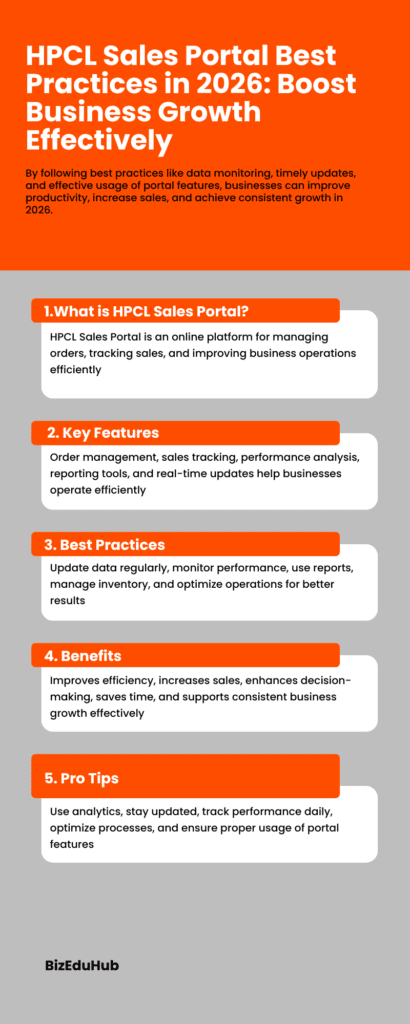
The HPCL Sales Portal is, at its best, a genuine business growth platform — not just a digital filing cabinet for your HPCL-related paperwork. The difference between partners who experience it as one and partners who experience it as the other comes down almost entirely to habits: how consistently they engage with it, how deeply they explore its data, and how proactively they connect what the portal tells them to what they do in their operations.
In 2026, the businesses that are growing within India’s petroleum and lubricants distribution landscape are, almost without exception, the ones that have gotten serious about digital operations. The HPCL Sales Portal is not a peripheral part of that picture — it is central to it. The scheme earnings you might be leaving on the table, the inventory decisions you’re making without data, the compliance risks you’re carrying from manual record-keeping — all of these are addressable through the portal when you commit to using it well.
Take one practice from this guide and implement it this week. Build from there. The HPCL Sales Portal has more to offer your business than most of its users ever discover — and in a competitive market, that gap between what’s available and what you’re actually using is, in the most practical sense, the growth opportunity sitting right in front of you.
!You might be interested in reading this page as well
Remote Operations Strategies in 2026: Effective Management Guide for Teams