
A Personal Look at the Punjab School Education Board and Its Role in Shaping Young Minds
When we talk about education in India, conversations often drift toward big national boards, coaching hubs, and competitive exams. But in the heart of northern India, quietly and consistently shaping the academic journeys of lakhs of students, stands the Punjab School Education Board. For families across Punjab, this board isn’t just an institution—it’s part of their household vocabulary. It’s discussed at dinner tables, during parent-teacher meetings, and in anxious whispers before board exam results.
The Punjab School Education Board, often referred to as PSEB, has played a foundational role in strengthening education in the state. From designing syllabi that reflect regional identity to implementing reforms that align with national standards, it carries a responsibility that goes far beyond conducting exams. It shapes aspirations. It influences career paths. It holds together a system that connects rural classrooms to global possibilities.
In this blog, I want to take you beyond official definitions and statistics. Let’s explore how the Punjab School Education Board functions, how it has evolved, and how it continues to enhance quality education in Punjab in ways that truly matter.
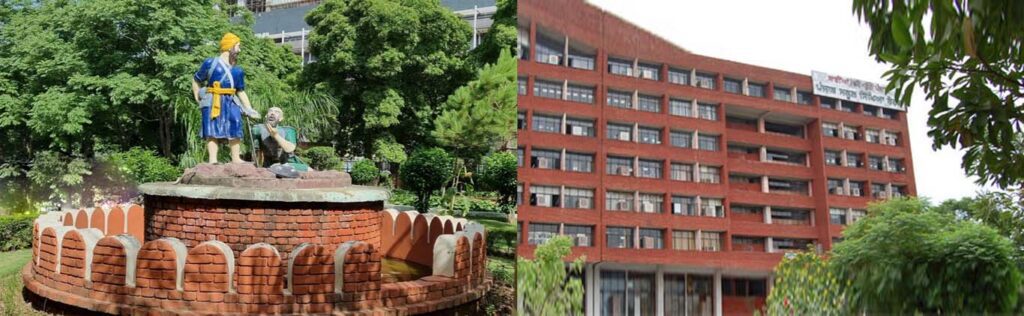
The Origin and Evolution of the Punjab School Education Board
1. A Vision Rooted in Regional Identity
The Punjab School Education Board was established in 1969 with a clear mission: to regulate and supervise school education in Punjab. But its formation wasn’t just administrative. It was deeply cultural. Punjab, with its vibrant language, history, and identity, needed an education system that reflected its soul.
Unlike centralised boards, the Punjab School Education Board focused on integrating Punjabi language and culture into the curriculum. This ensured that students didn’t grow up disconnected from their roots. At the same time, it maintained alignment with national educational frameworks, striking a balance between local relevance and national competitiveness.
2. Growth Through Changing Times
Over the decades, the Punjab School Education Board has adapted to multiple waves of change—educational reforms, digital transitions, policy shifts, and global competition. From traditional paper-based examinations to online processes and digital result systems, it has steadily modernised its operations.
What’s remarkable is that this evolution hasn’t been rushed. It has been steady and grounded. And perhaps that’s why the system still feels familiar and reliable to students and parents alike.
Structure and Responsibilities of the Punjab School Education Board
To truly understand how the Punjab School Education Board enhances quality education, we need to look at what it actually does.
1. Designing and Updating Curriculum
One of the primary responsibilities of the Punjab School Education Board is to develop curricula for classes from primary to senior secondary levels. The board ensures that the syllabus remains academically rigorous while being age-appropriate and relevant.
The curriculum is periodically revised to incorporate updates recommended by bodies like the National Council of Educational Research and Training. This ensures that students in Punjab are not academically isolated but are in sync with national educational standards.
2. Conducting Board Examinations
The board conducts examinations for Class 8, Class 10, and Class 12. For many students, these exams are defining milestones. They determine subject streams, college admissions, and sometimes even career direction.
But beyond conducting exams, the Punjab School Education Board has worked toward making assessments more transparent and structured. Clear marking schemes, evaluation guidelines, and timely results have improved trust in the system.
3. Affiliation and Regulation of Schools
Thousands of government and private schools across Punjab are affiliated with the Punjab School Education Board. The board sets guidelines regarding infrastructure, teacher qualifications, and academic standards.
This regulatory role ensures a baseline quality across schools, whether they’re in bustling cities like Ludhiana or smaller towns and villages.
How the Punjab School Education Board Enhances Quality Education
Quality education is not built overnight. It is the result of consistent policy decisions, teacher training, student engagement, and curriculum innovation. Let’s explore how the Punjab School Education Board works toward improving educational standards.
1. Emphasis on Mother Tongue Education
One of the most powerful aspects of the Punjab School Education Board is its commitment to promoting Punjabi language education. Research consistently shows that children learn concepts more effectively in their mother tongue during foundational years.
By ensuring that Punjabi remains central to the curriculum, the board strengthens conceptual clarity and cultural pride. At the same time, English and Hindi are taught rigorously to prepare students for competitive environments.
2. Focus on Rural Education
Punjab has a significant rural population. The Punjab School Education Board understands this demographic reality. Many of its policies are designed to uplift rural schools—improving infrastructure, ensuring access to textbooks, and standardising examination processes.
I’ve spoken to students from small villages who, thanks to the board’s standardised syllabus, compete confidently in state-level entrance exams. That kind of empowerment is not accidental—it’s systemic.
3. Continuous Assessment and Academic Reforms
The board has increasingly focused on continuous and comprehensive evaluation rather than relying solely on final exams. This approach reduces pressure and encourages year-round learning.
Periodic curriculum reviews and updates ensure that subjects like science, mathematics, and social studies reflect current knowledge rather than outdated information.
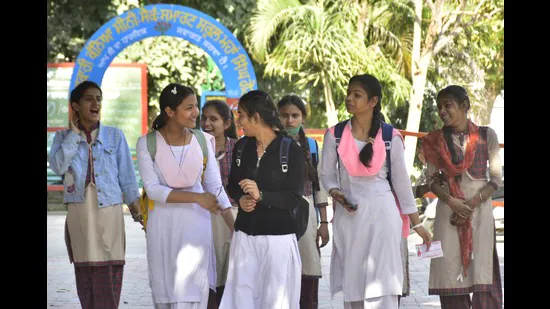
The Role of Technology in Modernising the Punjab School Education Board
1. Digital Results and Online Services
Gone are the days when students would crowd outside notice boards waiting for the result lists. Today, the Punjab School Education Board offers online result portals, making access easier and more transparent.
This digital transformation not only reduces administrative burden but also increases accuracy and efficiency.
2. Integration with National Educational Initiatives
With the introduction of policies like the National Education Policy 2020, state boards across India have been encouraged to adopt flexible, skill-based learning approaches.
The Punjab School Education Board has begun aligning its systems with these reforms—emphasising multidisciplinary learning, vocational education, and critical thinking.
Challenges Faced by the Punjab School Education Board
No education system is without challenges. A realistic discussion must acknowledge these.
1. Urban-Rural Infrastructure Gap
While the Punjab School Education Board regulates schools, infrastructure differences between urban and rural areas remain a concern. Access to smart classrooms, laboratories, and extracurricular resources can vary significantly.
However, the board’s increasing focus on government school reforms is gradually narrowing this gap.
2. Competitive Pressure from Central Boards
In recent years, many parents have opted for central boards like the Central Board of Secondary Education, believing they offer better preparation for national-level exams.
The Punjab School Education Board has responded by updating syllabi and aligning examination standards, ensuring its students remain equally competitive.
Real-Life Impact: Stories from the Ground
1. From Village Classroom to Engineering College
A student I once met from a government school affiliated with the Punjab School Education Board had cleared a prestigious engineering entrance exam. When asked about his preparation, he said something simple: “Our basics were strong.”
That statement stayed with me. Quality education is not about flashy infrastructure—it’s about conceptual clarity and consistent guidance.
2. Girls’ Education and Empowerment
The board has also played a significant role in encouraging girls’ education. With improved school access and consistent examination systems, female enrollment and performance in board exams have steadily improved.
Education in Punjab is no longer seen as optional for girls. It is seen as essential.
Vocational Education and Skill Development
The modern world demands more than textbook knowledge. Recognising this, the Punjab School Education Board has introduced vocational subjects at the senior secondary level.
Fields like agriculture, information technology, healthcare, and retail management provide students with practical skills. This is especially valuable in a state like Punjab, where agriculture remains economically significant.
By bridging academic learning with employability, the Punjab School Education Board is preparing students not just for exams—but for life.
Teacher Training and Capacity Building
Quality education depends heavily on teachers. The Punjab School Education Board collaborates with educational bodies to conduct teacher training programs.
Workshops, updated teaching materials, and curriculum orientation sessions ensure that teachers stay aligned with evolving academic standards.
When teachers feel equipped and confident, classrooms transform. And that transformation directly benefits students.
The Cultural Influence of the Punjab School Education Board
Beyond academics, the board promotes cultural activities, literature, and historical awareness. Students learn about Punjab’s rich heritage alongside mathematics and science.
In cities like Amritsar and across rural districts, school competitions, language festivals, and cultural programs keep traditions alive within educational spaces.
This integration of culture and curriculum fosters a sense of belonging that standardised national frameworks sometimes overlook.
The Administrative Framework Behind the Punjab School Education Board
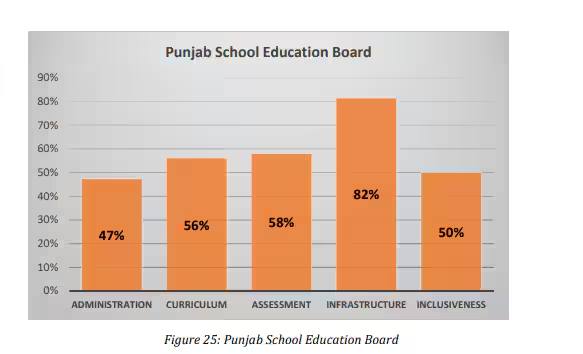
Behind every examination timetable and result announcement lies a structured administrative system. The Punjab School Education Board operates through various departments that handle academics, examinations, affiliations, finance, and student services. While students often interact with the board only during exams, its year-round functioning involves careful coordination and planning.
The board works in collaboration with the Punjab state government to implement education-related directives. Policy decisions taken at the state level are translated into academic action through the board’s mechanisms. This includes syllabus updates, teacher guidelines, and examination reforms. Such coordination ensures that education policy does not remain theoretical but reaches classrooms in a practical form.
Textbooks and Learning Materials: Building Conceptual Foundations
One of the most visible contributions of the Punjab School Education Board is the development and approval of textbooks. These books are designed to align with the prescribed syllabus while remaining accessible to students from diverse socio-economic backgrounds.
Textbooks emphasise clarity of language and step-by-step explanation of concepts. Especially in subjects like mathematics and science, the focus remains on understanding rather than rote memorisation. Examples and exercises are structured to gradually increase in difficulty, allowing students to build confidence as they progress.
Student Support Systems and Examination Assistance
For students, the board is more than an examining authority. It also functions as a support system during crucial academic phases. Detailed date sheets, clear examination instructions, and standardised answer formats help reduce confusion and anxiety.
Model question papers and sample papers released by the board give students a clearer understanding of exam patterns. This transparency allows students to prepare strategically rather than rely on guesswork. Re-evaluation and rechecking procedures further enhance trust in the examination system by providing students with a formal channel to address concerns.
Role of Schools in Implementing Board Vision
While the board designs policies and frameworks, schools play a critical role in implementation. Affiliated schools act as the final link between board guidelines and students’ everyday learning experiences.
The Punjab School Education Board provides academic calendars and teaching guidelines to ensure uniformity across schools. This helps prevent disparities in syllabus coverage and teaching pace. Whether a school is privately managed or government-run, adherence to board norms ensures that students are evaluated on a common academic platform.
Addressing Educational Equity Across Punjab
Punjab’s educational landscape includes urban centres, semi-urban towns, and rural villages. The board’s standardised syllabus and examination system play a significant role in reducing educational inequality across these regions.
By ensuring that a student in a rural government school studies the same syllabus as one in a city-based private institution, the board creates a level academic field. This uniformity allows merit to play a greater role in academic progression, irrespective of geographic location.
Language Policy and Multilingual Learning
Language remains a defining feature of the Punjab School Education Board’s academic approach. Punjabi is not merely treated as a subject but as a medium through which students connect with their cultural heritage.
At the same time, the inclusion of English and Hindi ensures multilingual competence. This balanced approach allows students to remain rooted in their identity while developing skills needed for national and global communication.
Evaluation Reforms and Changing Assessment Patterns
Assessment methods have evolved steadily. While written examinations remain central, there is increased emphasis on internal assessments and practical evaluation, especially in science and vocational subjects.
This shift recognises that learning outcomes cannot be measured through theory exams alone. Practical skills, project work, and classroom engagement contribute to a more holistic evaluation of student ability.
Gradual implementation of such reforms helps schools and students adapt without disruption. This measured approach ensures stability while encouraging academic improvement.
Public Trust and Generational Association
One of the lesser-discussed strengths of the Punjab School Education Board is the deep generational connection families share with it. Parents who studied under the board often choose the same system for their children.
This continuity builds trust. Familiarity with examination patterns, grading systems, and academic expectations reduces uncertainty for families. In regions where education decisions are influenced by community experience, such trust plays a significant role.
Public perception, built over decades, contributes to the board’s enduring relevance despite growing competition from national boards.
Preparing Students for Higher Education and Careers
While school education forms the base, its ultimate purpose is to prepare students for future paths. The board’s curriculum aims to equip students with the foundational knowledge required for higher education across disciplines.
Students from the Punjab School Education Board routinely pursue careers in engineering, medicine, agriculture, commerce, and public services. Strong basics in mathematics, sciences, and languages help them adapt to diverse academic environments.
Vocational subjects further expand career possibilities, especially for students seeking early entry into the workforce or skill-based professions.
Long-Term Impact on Punjab’s Educational Landscape
Over the decades, the Punjab School Education Board has contributed to improving literacy rates and educational participation across the state. Its policies have shaped how education is accessed, delivered, and evaluated.
While challenges persist, the board’s steady approach has ensured continuity in a rapidly changing educational environment. Incremental reform, rather than abrupt change, has allowed the system to remain stable and dependable.
This long-term consistency is one of the board’s defining strengths.
Looking Ahead: The Future of the Punjab School Education Board
The future of the Punjab School Education Board lies in balancing tradition with innovation.
1. Embracing Skill-Based Education
With growing emphasis on entrepreneurship and digital skills, the board is likely to expand vocational and skill-based subjects further.
2. Strengthening Digital Infrastructure
Digital classrooms, e-learning platforms, and online teacher training will become even more central. The pandemic years taught educational systems the importance of adaptability.
3. Greater Collaboration with Higher Education
Stronger alignment between school curriculum and college expectations will help students transition more smoothly into higher education.
Conclusion: Why the Punjab School Education Board Still Matters
The Punjab School Education Board is more than an examination authority. It is an educational backbone for the state. It connects rural aspirations with urban opportunities. It preserves cultural identity while embracing academic progress.
In a world obsessed with rankings and national comparisons, it’s easy to overlook the quiet strength of state boards. But if you walk into classrooms across Punjab, you’ll see something powerful—students learning in their mother tongue, solving complex math problems, dreaming about engineering colleges, civil services, startups, and global careers.
That journey often begins with the Punjab School Education Board.
And as long as it continues to adapt, reform, and prioritise quality education, it will remain not just relevant—but essential to Punjab’s future.
Education, after all, is not just about passing exams. It’s about building confidence, preserving identity, and opening doors. In that mission, the Punjab School Education Board continues to play a vital and evolving role.
!You might be interested in reading this page as well
Exploring the Top Competitive Exams After 12th: Opportunities for Future Careers