
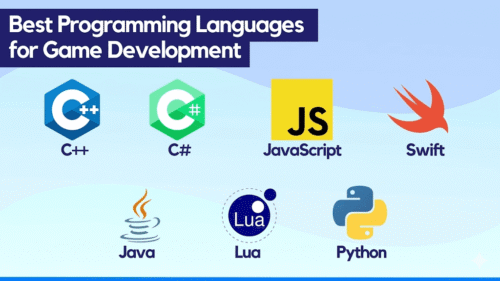
Why Programming Languages Matter in Game Development
Before diving into specific languages, it’s worth understanding why programming languages play such a vital role in Game Development.
Think of a game as a living system. Every movement, sound, animation, and decision inside the game is controlled by code. When a character jumps, when enemies react to your actions, or when weather changes dynamically — all of it is powered by programming.
The right language allows developers to:
- Optimize performance for smooth gameplay
- Handle complex physics and rendering systems
- Build multiplayer networking systems
- Integrate audio, animations, and AI behaviors
- Support cross-platform development
I remember watching a friend create his first simple 2D platformer during college. The graphics were basic, but when he added code that made the character slide slightly after landing from a jump, the movement suddenly felt natural. That tiny detail — just a few lines of code — made the game feel alive.
That’s the magic of programming in Game Development.
Key Factors When Choosing a Game Development Language
Not every programming language is suitable for every game. Developers usually consider several important factors before deciding which language to use.
1. Performance Requirements
High-performance games, especially 3D titles or multiplayer games, require languages that offer low-level control and speed.
2. Game Engine Compatibility
Many languages are tied closely to popular game engines. For example, certain engines primarily support specific languages.
3. Ease of Learning
Some languages are beginner-friendly and great for indie developers or students starting their Game Development journey.
4. Platform Support
Developers may want their games to run on PCs, consoles, mobile devices, or even web browsers.
5. Community and Resources
Languages with strong communities provide better documentation, tutorials, and problem-solving support.
With these factors in mind, let’s explore the languages that power modern gaming experiences.
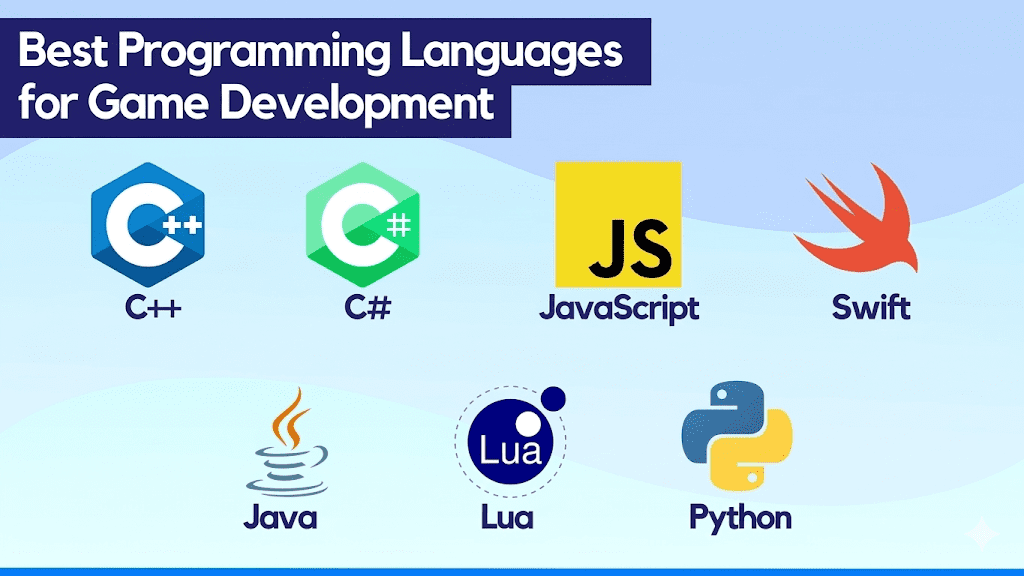
C++: The Powerhouse of Game Development
If there’s one language that has shaped modern Game Development, it’s C++.
C++ has been the foundation for countless legendary games. Its combination of performance, flexibility, and control makes it ideal for building complex systems that require speed and efficiency.
1. Why Developers Choose C++
C++ allows developers to control memory management and hardware resources in ways that higher-level languages often cannot. This is crucial when building large-scale games that need to run smoothly even with millions of calculations happening every second.
Major game engines rely heavily on C++, including:
- Unreal Engine
- CryEngine
- Source Engine
Many blockbuster games — from open-world adventures to first-person shooters — rely on C++ under the hood.
2. Where C++ Excels in Game Development
C++ is particularly strong in areas such as:
- Game engine architecture
- Physics simulations
- Graphics rendering
- Real-time performance optimization
While it can be challenging for beginners, mastering C++ opens doors to professional Game Development opportunities.
C#: The Language Behind Unity
For many aspiring developers, C# becomes their first real step into Game Development.
This language works seamlessly with the Unity game engine, one of the most widely used platforms for creating both indie and commercial games.
1. Why C# Is Popular Among Game Developers
C# offers a balance between power and simplicity. It’s easier to learn than C++, yet still capable of building complex systems.
Unity developers use C# to:
- Control character behavior
- Create gameplay mechanics
- Manage user interfaces
- Handle physics and collisions
2. Real-World Game Success Stories
Some hugely successful games developed using C# and Unity include:
- Hollow Knight
- Cuphead
- Among Us
These games prove that powerful, engaging experiences don’t always require massive development teams.
For indie creators, C# has become a gateway into the exciting world of Game Development.
Python: A Beginner-Friendly Gateway
While Python may not be the first language used in high-performance commercial games, it plays an important role in Game Development, especially for beginners and rapid prototyping.
1. Why Python Is Useful for Game Development
This makes it ideal for learning programming concepts without getting overwhelmed by complicated code structures.
Developers often use Python for:
- Game prototypes
- AI scripting
- Tools development
- Automation tasks
2. Libraries for Game Development
Several libraries allow developers to create games using Python, such as:
- Pygame
- Panda3D
- Arcade
Students and hobbyists often start their journey in Game Development with Python before transitioning to more performance-focused languages.
JavaScript: Powering Browser-Based Games
The rise of web gaming has brought JavaScript into the spotlight in Game Development.
JavaScript allows developers to create interactive games that run directly inside web browsers without requiring downloads or installations.
1. Advantages of JavaScript in Game Development
JavaScript offers several benefits:
- Instant accessibility through browsers
- Cross-platform compatibility
- Large developer ecosystem
- Integration with HTML5 and WebGL
2. Popular JavaScript Game Frameworks
Developers often rely on frameworks such as:
- Phaser
- Three.js
- Babylon.js
These tools make it easier to build everything from simple puzzle games to visually impressive 3D experiences.
Many popular casual games that people play during short breaks are built using JavaScript.
Java: A Strong Choice for Mobile Games
Java has long been associated with Android development, and it remains an important language in mobile Game Development.
Before newer frameworks emerged, many mobile games were written entirely in Java.
1. Why Java Is Still Relevant
Java offers stability, strong performance, and compatibility with Android devices worldwide.
Developers use Java for:
- Android game logic
- Multiplayer networking
- Backend game services
2. Java in Mobile Gaming History
Early mobile hits — from puzzle games to action titles — relied heavily on Java. Even today, many Android-based games still incorporate Java within their architecture.
Swift and Kotlin: The Future of Mobile Game Development
As mobile platforms evolved, new languages began shaping modern Game Development for smartphones.
1. Swift for iOS Games
Swift is Apple’s modern programming language designed for speed and safety.
It allows developers to build smooth and responsive games for iPhones and iPads.
Swift integrates well with:
- SpriteKit
- SceneKit
- Apple’s Metal graphics framework
2. Kotlin for Android Games
Kotlin has become the preferred language for Android development.
Compared to Java, it offers:
- Cleaner syntax
- Reduced boilerplate code
- Improved safety features
Together, Swift and Kotlin represent the next generation of mobile Game Development.
Lua: The Lightweight Scripting Language
Lua might not be as widely known as other languages, but it plays a significant role in Game Development.
Many studios use Lua as a scripting language within larger engines.
Why Developers Use Lua
Lua is lightweight and extremely fast, making it ideal for scripting gameplay logic without affecting overall performance.
Developers commonly use Lua for:
- Game event scripting
- AI behaviors
- Modding systems
- Custom gameplay mechanics
Several well-known games have used Lua to control dynamic elements inside their worlds.
The Role of Game Engines in Language Selection

When discussing programming languages in Game Development, it’s impossible to ignore game engines.
A game engine acts as the framework that handles rendering, physics, audio, and asset management.
Popular engines often determine which language developers use.
Examples of Engine-Language Pairings
- Unreal Engine → C++
- Unity → C#
- Godot → GDScript, C#
- Phaser → JavaScript
Choosing the right engine often simplifies development by providing built-in tools that would otherwise take years to build from scratch.
Combining Multiple Languages in Game Development
Modern Game Development rarely relies on a single programming language.
Instead, developers combine multiple languages to handle different parts of the project.
For example:
- C++ for engine performance
- C# for gameplay scripting
- Python for automation tools
- JavaScript for web integration
This multi-language approach allows teams to optimize each system for performance, flexibility, and scalability.
Learning Game Development Languages: Where to Start
For beginners, choosing a starting point can feel overwhelming.
If you’re exploring Game Development, here are a few practical paths:
1. Start with C# and Unity
Unity offers beginner-friendly tools, massive learning resources, and strong community support.
2. Experiment with Python
Python helps build foundational programming knowledge without steep learning curves.
3. Explore JavaScript for Web Games
Creating browser-based games can be a fun way to learn interactive design and programming.
The key is to start small — maybe a simple platformer or puzzle game — and gradually expand your skills.
Challenges Developers Face When Learning Game Development Languages

Learning programming languages for game development can be exciting, but it is rarely a smooth journey. Many beginners start with enthusiasm after watching tutorials or playing inspiring games, only to realize that building even a small project requires patience and persistence.
One of the biggest challenges is understanding how different systems in a game interact with each other. A character moving on screen might seem simple, but behind that movement lies a chain of calculations. The game must detect keyboard or controller input, update the character’s position, check for collisions, apply physics rules, and then render the updated frame on the screen. All of this happens in a fraction of a second.
For new developers, it can feel overwhelming at first. Debugging a small mistake in code can sometimes take hours. A misplaced bracket or an incorrect variable can cause a game mechanic to behave in unexpected ways.
However, these challenges are also part of what makes game development so rewarding. When a developer finally solves a tricky problem, the sense of accomplishment can be incredibly satisfying.
Many experienced developers often say that their early mistakes were the best teachers. Each error forced them to understand the language and the game engine more deeply.
The Importance of Game Engines
While programming languages are essential, most modern games are not built entirely from scratch. Instead, developers rely on game engines to simplify the process.
A game engine provides pre-built systems for common tasks such as rendering graphics, handling physics, managing animations, and processing player input. Without these tools, developers would need to write thousands of lines of code just to display a moving object on the screen.
Game engines also provide visual editors that allow developers to drag and drop assets, arrange environments, and preview gameplay instantly. This combination of visual tools and programming languages creates a flexible environment for both artists and programmers to collaborate.
For example, a developer using Unity can focus primarily on designing gameplay mechanics while the engine takes care of complex tasks like lighting, collision detection, and scene management. The developer simply writes scripts—usually in C#—to control how objects behave.
Indie Development and the Rise of Small Teams
One of the most exciting trends in recent years is the rise of independent game developers, often called “indie developers.” Unlike large studios with hundreds of employees, indie teams are usually small groups—or sometimes even a single person—working on a passion project.
Programming languages play a huge role in enabling this movement.
Tools like Unity and engines that support languages such as C# allow small teams to create surprisingly polished games. Developers no longer need massive budgets or huge teams to build engaging experiences.
Some indie games have even achieved enormous global success.
The Role of Collaboration in Game Development
Game development is rarely a solo effort, especially for larger projects. Even though programming languages form the technical foundation of games, collaboration between different disciplines is what ultimately brings a project to life.
Programmers work closely with artists, sound designers, writers, and game designers. Each group contributes something unique to the final product.
For instance, a game designer might describe how a character should move or how enemies should behave during combat. The programmer then translates those ideas into code using the chosen programming language.
The programming language itself becomes a tool that allows these creative ideas to take shape.
Building Your First Game Project
For beginners, the best way to learn game development languages is by creating small projects rather than trying to build a large game immediately.
Starting with a simple project allows developers to focus on understanding the basics without becoming overwhelmed.
A beginner might start with a project such as:
- A basic 2D platformer where a character jumps between platforms
- A simple puzzle game that requires solving logic challenges
- A small shooting game with moving targets
- A basic racing game prototype
These projects may seem simple, but they help developers learn essential concepts like game loops, collision detection, player input, and object interaction.
Many professional developers today started their careers by building small hobby projects during their spare time.
Continuous Learning in the Gaming Industry
The gaming industry evolves quickly, which means developers must constantly update their skills.
New graphics technologies, hardware improvements, and development frameworks appear regularly. Languages themselves also evolve, introducing new features that make development easier or more efficient.
For example, modern graphics technologies like real-time ray tracing have pushed developers to optimize rendering pipelines and explore new programming techniques.
Keeping up with these changes requires curiosity and a willingness to keep learning.
Many developers stay informed by reading technical blogs, participating in online communities, and experimenting with new tools in their personal projects.
The field of game development rewards those who enjoy exploring new ideas and solving challenging problems.
The Human Side of Game Development
Behind every line of code is a developer trying to bring an idea to life.
Sometimes that idea starts as a childhood dream: building a game that feels as exciting as the ones we grew up playing.
Other times it begins with curiosity — wondering how characters move or how virtual worlds function.
Languages are simply tools in this creative process. What truly makes Game Development special is the blend of creativity, logic, and storytelling that developers pour into their work.
Final Reflection
At its core, game development is a creative journey powered by technology. Programming languages serve as the bridge between imagination and interactive experience.
They transform concepts into functioning worlds, enabling players to explore environments, solve challenges, and experience stories in ways that traditional media cannot offer.
Whether someone chooses to learn C++, C#, Python, JavaScript, or any other language, the most important step is simply to begin experimenting.
Every great game once started as a small idea—and often as just a few lines of code written by a curious developer eager to see what might happen next.
The Future of Game Development Languages

The gaming industry continues to evolve rapidly.
New technologies like virtual reality, augmented reality, and cloud gaming are pushing Game Development into new territories.
Languages will continue adapting to support:
- Real-time ray tracing
- AI-driven gameplay systems
- Massive multiplayer environments
- Cross-platform cloud gaming
At the same time, developer-friendly languages and tools will make it easier for independent creators to build incredible experiences.
The barrier to entry is lower than ever — and that’s incredibly exciting.
Conclusion
The world of Game Development is built on creativity, technical expertise, and the powerful languages that bring ideas to life.
From the performance-driven capabilities of C++ to the accessibility of C#, the flexibility of JavaScript, and the simplicity of Python, each language plays a unique role in shaping the games we love.
Choosing the right language depends on the type of game you want to create, the platform you’re targeting, and the tools you feel most comfortable using.
But ultimately, the language itself is only part of the story.
What truly defines great Game Development is the passion behind the code — the desire to create worlds that players can explore, stories they can experience, and adventures they’ll never forget.
And who knows? The next unforgettable game might just start with a single line of code written by someone inspired to build something extraordinary.
!You might be interested in reading this page as well
The Rise of Innovative Tools & Technologies: What Smart People Are Using Today