
Introduction: Why Competitive Exams After 12th Matter More Than You Think
The moment students complete their 12th grade, life seems to split into a hundred possible directions. Some feel excited. Others feel anxious. A few follow the crowd. In India, especially, the phase after school is not just about choosing a college—it is about choosing a career path that may define decades of one’s life. This is where Competitive Exams After 12th become incredibly significant.
For many students, these exams are more than tests. They are a gateway to prestigious institutions, respected professions, financial independence, and sometimes, dreams nurtured since childhood. Whether it’s engineering, medicine, defense services, law, management, design, or government roles, competitive exams offer structured, merit-based opportunities.
But here’s the truth: no one says loudly enough that not every student needs to chase the same exam. The right choice depends on aptitude, personality, and long-term goals. In this detailed guide, we’ll explore the top Competitive Exams After 12th, the opportunities they unlock, and how students can choose wisely instead of blindly.
Engineering Entrance Exams: Building the Future
For those with strong analytical skills andan interest in technology, this field offers diverse career paths—from AI to civil infrastructure.
1. JEE Main and JEE Advanced
The most well-known engineering entrance pathway is through the Joint Entrance Examination, commonly known as JEE.
- JEE Advanced is required for admission into the prestigious Indian Institutes of Technology.
Cracking JEE Advanced can open doors to IITs, institutions globally recognized for innovation and research excellence. Alumni from IITs have gone on to lead global companies, launch startups, and contribute to cutting-edge research.
But JEE is not only about IITs. JEE Main scores are also accepted by National Institutes of Technology and many other reputed colleges.
Preparation requires discipline, conceptual clarity, and consistent practice. Students often begin preparation as early as class 9 or 10. However, focused preparation over 1–2 years with a smart strategy can also work.
2. State-Level and Private Engineering Exams
Apart from JEE, many states conduct their own entrance exams. Private universities also conduct separate tests. These offer good alternatives for students who want a quality education without the extreme competition of JEE Advanced.
Engineering as a career is evolving. Today, it’s not just about mechanical or civil branches. Fields like data science, robotics, cybersecurity, and renewable energy are rapidly expanding.
Medical Entrance Exams: Serving with Science
If a student dreams of becoming a doctor, dentist, or pursuing allied health sciences, there is one primary gateway.
NEET
The National Eligibility cum Entrance Test, popularly known as NEET, is conducted by the National Testing Agency for admission to MBBS, BDS, AYUSH, and other medical courses.
NEET is considered one of the toughest Competitive Exams After 12th due to the vast syllabus and intense competition. Lakhs of students appear each year for the limited seats in government medical colleges.
Medical education demands patience and long-term commitment. MBBS itself takes five and a half years, followed by specialization if one chooses to pursue it.
Yet, the reward is profound. Beyond financial stability, medicine offers something deeply meaningful—the ability to save lives. Many doctors describe their profession as a calling rather than just a job.
Defense Exams: A Career of Honor and Discipline
For students who dream of wearing the uniform and serving the nation, defense exams provide prestigious pathways.
NDA
The National Defence Academy and Naval Academy Examination, commonly called NDA, is conducted by the Union Public Service Commission.
Successful candidates join the National Defence Academy and later serve in the Army, Navy, or Air Force.
NDA is not just about academic ability. It tests physical fitness, leadership qualities, confidence, and personality through the Services Selection Board (SSB) interview.
A defense career offers respect, structured growth, and the opportunity to lead from a young age. It is ideal for students who thrive in disciplined environments and seek adventure.
Law Entrance Exams: Advocating Change
Law is no longer a fallback career. Today, it is dynamic, respected, and financially rewarding.
CLAT
The Common Law Admission Test (CLAT) is conducted by the Consortium of National Law Universities for admission into top National Law Universities (NLUs).
Law today is not limited to courtrooms. Graduates work in corporate firms, policy-making, international organizations, and even the media.
Students who enjoy reading, debating, analyzing arguments, and understanding societal issues often excel in law entrance exams.
Management and Commerce-Oriented Exams
Commerce students often explore management, finance, or professional certifications.
1. CA Foundation
The Chartered Accountancy pathway begins with the CA Foundation, conducted by the Institute of Chartered Accountants of India.
Becoming a Chartered Accountant requires clearing multiple levels, articleship training, and dedication. It is demanding but highly rewarding.
2. Other Commerce Exams
Students can also pursue company secretary (CS), cost and management accountancy (CMA), or integrated BBA programs through entrance tests.
Management education opens doors to corporate leadership roles, entrepreneurship, and consulting careers.
Design and Creative Field Exams
Not every bright student fits into engineering or medicine. Creative minds also deserve structured pathways.
1. NIFT Entrance Exam
The NIFT Entrance Examination is conducted for admission into the National Institute of Fashion Technology.
Fashion, design, and creative industries are booming. Students with artistic talent and innovative thinking can build thriving careers in design, branding, and lifestyle industries.
2. NID Entrance Exam
The NID Design Aptitude Test grants admission to the National Institute of Design.
Design careers today include UI/UX, animation, industrial design, and digital media—fields that blend creativity with technology.
Government Job Exams After 12th
Not every competitive exam leads to college. Some lead directly to employment.
1. SSC CHSL
It offers clerical and administrative posts in central government departments. For students seeking early job security and stable income, this is a strong option.
2. Railway and Banking Exams
Various railway recruitment exams and clerical banking exams also provide opportunities soon after 12th grade.
Government roles are attractive because of job stability, benefits, and work-life balance.
Hotel Management and Hospitality Exams
Students who enjoy interaction, organization, and service industries can explore hospitality.
NCHM JEE
The National Council for Hotel Management Joint Entrance Examination offers admission into hospitality institutes.
Hospitality careers range from hotel management to cruise operations and international tourism.
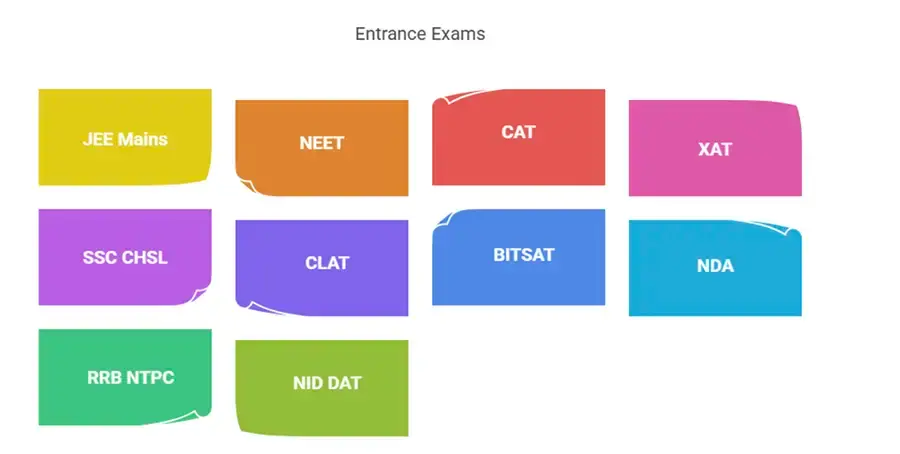
How to Choose the Right Competitive Exam After 12th
Choosing among Competitive Exams After 12th can feel overwhelming. Here are some practical guidelines:
1. Assess Your Strengths
Are you strong in mathematics? Logical reasoning? Biology? Communication skills? Creative thinking? Honest self-assessment saves years of regret.
2. Research the Career, Not Just the Exam
Many students prepare for exams without understanding the career behind them. For example, medicine requires years of study. Law requires continuous reading and argumentation. Engineering may involve coding, fieldwork, or research.
3. Consider Lifestyle and Long-Term Goals
Do you prefer a structured government job? Corporate flexibility? Entrepreneurship? Travel-heavy roles?
Career satisfaction often depends more on lifestyle alignment than salary alone.
4. Financial and Time Investment
Some careers require long educational journeys. Ensure your family situation and personal patience align with the commitment required.
Preparation Strategy for Competitive Exams After 12th
Preparation is not about studying 14 hours a day. It is about studying smartly.
- Build conceptual clarity.
- Solve previous years’ question papers.
- Take mock tests regularly.
- Maintain physical and mental health.
- Avoid comparison traps.
Students who treat preparation like a marathon—not a sprint—perform better.
The Emotional Side of Competitive Exams
It’s important to acknowledge the emotional pressure surrounding Competitive Exams After 12th. Social comparison, parental expectations, and peer competition can become overwhelming.
A rank does not define intelligence. A single attempt does not define destiny. Many successful professionals did not clear their dream exam on the first try.
Failure can redirect you toward paths you never considered—but might actually enjoy more.
Emerging Career Paths and New-Age Exams
The career landscape is changing rapidly.
Today, fields like data analytics, artificial intelligence, digital marketing, gaming, and content creation are growing. Many private institutions conduct aptitude-based entrance tests for these programs.
Students should remain open-minded. The “safe” career of yesterday may not be the most fulfilling tomorrow.
Understanding the Psychology Behind Competitive Exams After 12th
Before diving deeper into specific exams, it’s important to understand why Competitive Exams After 12th hold such power in a student’s life after 12th grade.
At this stage, students are transitioning from a highly structured school environment to a world where choices suddenly feel irreversible. Society often reinforces the idea that a single exam can determine success or failure. This psychological pressure can be heavier than the syllabus itself.
Competitive Exams After 12th provide clarity in chaos. They offer a defined goal, a timeline, and a measurable outcome. For many families, especially in India, these exams symbolize fairness—where merit, not background, decides opportunity. This belief is one of the strongest reasons competitive exams remain central to career planning.
However, this mindset can also be dangerous if unchecked. When students equate self-worth with rank, anxiety increases, and performance suffers. Recognizing that Competitive Exams After 12th are tools—not verdicts—helps students prepare with confidence rather than fear.
Engineering Beyond the Stereotype: What Students Often Miss
While engineering Competitive Exams After 12th are widely discussed, what often goes unspoken is the reality of engineering careers after graduation.
Many students enter engineering believing it guarantees a job. In reality, engineering rewards skills, not degrees. The entrance exam gets you into a college, but continuous learning determines long-term success.
Modern engineers are expected to:
- Learn new technologies independently
- Work in interdisciplinary teams
- Adapt quickly to industry changes
Students who enjoy problem-solving but dislike rote learning often struggle during entrance preparation but thrive later in practical engineering environments. This is why choosing engineering should be based on curiosity and adaptability—not just Competitive Exams After 12th rank.
Another overlooked factor is branch selection. Computer science is popular, but fields like electronics, materials science, environmental engineering, and biomedical engineering are quietly creating strong global opportunities.
Medical Aspirants: The Emotional and Ethical Commitment
Preparing for medical entrance Competitive Exams After 12th, like NEET, is as much an emotional journey as an academic one.
Unlike many other careers, medicine demands delayed gratification. While peers may start earning earlier, medical students often spend years studying with limited financial independence. This can test patience and motivation.
What sustains successful doctors is not just academic ability, but:
- Emotional resilience
- Empathy
- Ethical responsibility
Students who choose medicine solely for prestige or income may experience burnout. On the other hand, those who genuinely want to serve often find deep fulfillment despite the long journey.
It’s also important for aspirants to know that medicine has multiple paths. Not everyone needs to become an MBBS doctor. Fields like physiotherapy, medical research, public health, biotechnology, and hospital administration offer impactful careers with different work-life balances.
Defense Services: Life Lessons Beyond the Uniform
A defense career is unique because it shapes character as much as profession.
Students who clear NDA or other defense Competitive Exams After 12th often experience personal transformation early in life. Discipline, leadership, teamwork, and accountability become second nature.
What many students don’t realize is that defense training:
- Builds exceptional decision-making skills
- Encourages physical and mental toughness
- Creates lifelong camaraderie
Even after retirement, defense officers are highly valued in corporate leadership, disaster management, aviation, and public administration roles.
However, this path requires sacrifice. Frequent transfers, time away from family, and high-risk situations are realities students must accept with maturity.
Law as a Thinking Profession, Not Just a Degree
Law entrance Competitive Exams After 12th attract students who enjoy reasoning and expression, but law as a profession demands continuous intellectual engagement.
Legal careers reward those who:
- Read extensively
- Stay updated with societal changes
- Communicate persuasively
Many law graduates today work in emerging fields such as technology law, environmental law, international arbitration, and startup compliance.
What makes law exciting is its flexibility. A law graduate can move into policy-making, journalism, civil services, academia, or entrepreneurship. This adaptability makes law an excellent choice for students who dislike rigid career paths.
Commerce and Professional Courses: Patience Pays Off
Commerce-related Competitive Exams After 12th often test endurance more than speed.
Courses like CA, CS, and CMA require clearing multiple levels over several years. Failure rates are high, but so are long-term rewards for those who persist.
These careers suit students who:
- Enjoy structure and precision
- Are you comfortable with delayed success
- Prefer expertise over visibility
Unlike entrance exams with one-time pressure, professional courses demand consistency. Students learn early that steady effort often beats brilliance without discipline.
Creative Careers: Breaking the Myth of “Uncertainty”
Creative Competitive Exams After 12th are often misunderstood.
Design, fashion, animation, and digital media are sometimes dismissed as risky. In reality, these industries reward innovation, originality, and adaptability—skills that are increasingly valuable in a changing economy.
Creative entrance exams don’t test memorization. They assess:
- Observation
- Visual thinking
- Original problem-solving
Students who feel restricted by traditional academics often flourish here. With technology blending into creativity, careers like UI/UX design, game design, and digital branding offer global opportunities and freelance flexibility.
Government Exams: Stability with Responsibility
Competitive Exams After 12th are popular for a reason: stability.
For many families, a government job represents security, respect, and predictable growth. But government roles also require responsibility, patience, and public accountability.
Clerical or administrative posts may seem modest initially, but they offer:
- Structured promotions
- Pension benefits
- Work-life balance
Students who value routine, long-term planning, and service-oriented work often find deep satisfaction in these roles.
Coaching vs Self-Study: Making the Right Call
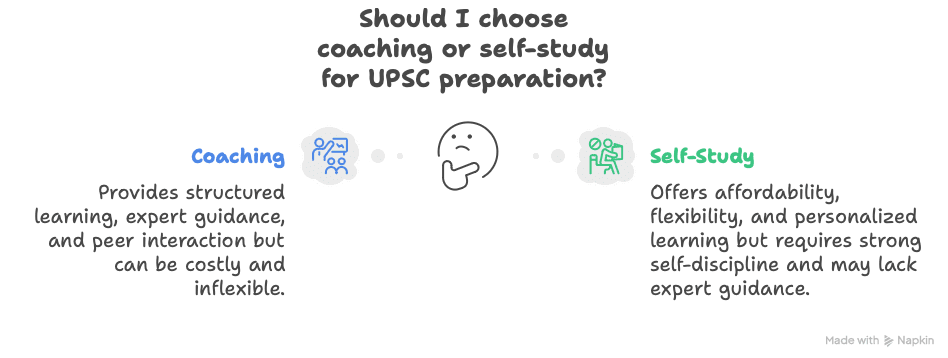
One major decision students face is whether to join coaching institutes.
Coaching can provide:
- Structure
- Expert guidance
- Competitive environment
But it is not a guarantee of success. Many top rankers succeed through self-study, especially when they:
- Use quality resources
- Analyze mistakes
- Maintain discipline
The best approach is personalized. Some students thrive in classrooms; others perform better independently. Honest self-awareness matters more than trends. Competitive Exams After 12th.
The Role of Parents in Competitive Exam Preparation
Parental support plays a crucial role—but it must be balanced.
Encouragement motivates. Pressure paralyzes.
Parents who:
- Listen without judgment
- Support multiple career options
- Respect a child’s individuality
Competitive Exams After 12th often help their children perform better emotionally and academically.
Open conversations about expectations, finances, and backup plans reduce fear and improve focus.
Backup Plans Are Not Signs of Weakness
One of the biggest myths around Competitive Exams After 12th is that having a backup plan means a lack of confidence.
In reality, smart students prepare Plan A with full dedication and Plan B with equal respect. Backup options reduce anxiety and allow students to perform better under pressure.
Many successful professionals reached their destination through unexpected routes. Flexibility is a strength—not a compromise.
Final Perspective: Success Is Bigger Than Any Exam

Competitive Exams After 12th are important—but they are not life itself.
They test knowledge, stamina, and strategy at a particular moment in time. They do not measure kindness, creativity, adaptability, or long-term potential.
Students who approach these exams with:
- Curiosity instead of fear
- Discipline instead of obsession
- Perspective instead of panic
not only perform better, but also grow stronger as individuals.
In the end, the goal is not just to clear an exam, but to build a life that feels meaningful, balanced, and aligned with who you truly are.
Conclusion: Turning Competitive Exams After 12th into Opportunities
Competitive Exams After 12th are not merely academic hurdles. They are structured gateways that connect ambition with opportunity. From engineering and medicine to law, defense, design, commerce, and government roles, each exam represents a unique career ecosystem.
The key is not to chase popularity but to chase alignment—between your strengths, interests, values, and long-term aspirations.
When approached with clarity and preparation, these exams can transform uncertainty into direction. They can open doors to respected institutions, meaningful professions, and stable futures.
But remember this: the Competitive Exams After 12th is only the beginning. The real career is built afterward—through hard work, adaptability, integrity, and continuous learning.
Choose wisely. Prepare sincerely. And treat every Competitive Exams After 12th not as pressure, but as a possibility.
!You might be interested in reading this page as well
Essential Career Guidance for Students in 2026: Navigating Your Future Path